
Faulty Forensics:
Spotlight on
Bloodstain Pattern analysis
What is blood pattern analysis?
Bloodstain pattern analysis is the process of studying bloodstains from a crime scene to draw conclusions about the details of the crime.
Techniques are used to draw conclusions from a potential crime scene, such as where the perpetrator may have been standing or even how tall they were. Innocent transfers of blood can be open to interpretation. There's lots of room for bias and error in these assessments that can lead to unfair trials and wrongful convictions.

Mistakes are Common
People can easily be implicated in a crime or death with even a microscopic amount of blood.
As the 2009 National Academy of Sciences report states, "The uncertainties associated with bloodstain pattern analysis are enormous." Bloodstain pattern analysis should only be used with other evidence that clearly shows the same result.
The National Academy of Sciences reported that "some experts extrapolate far beyond what can be supported."
Too many conclusions are incorrect
11.2%
Blood Pattern Analysis Case Study: Julie HaRPER
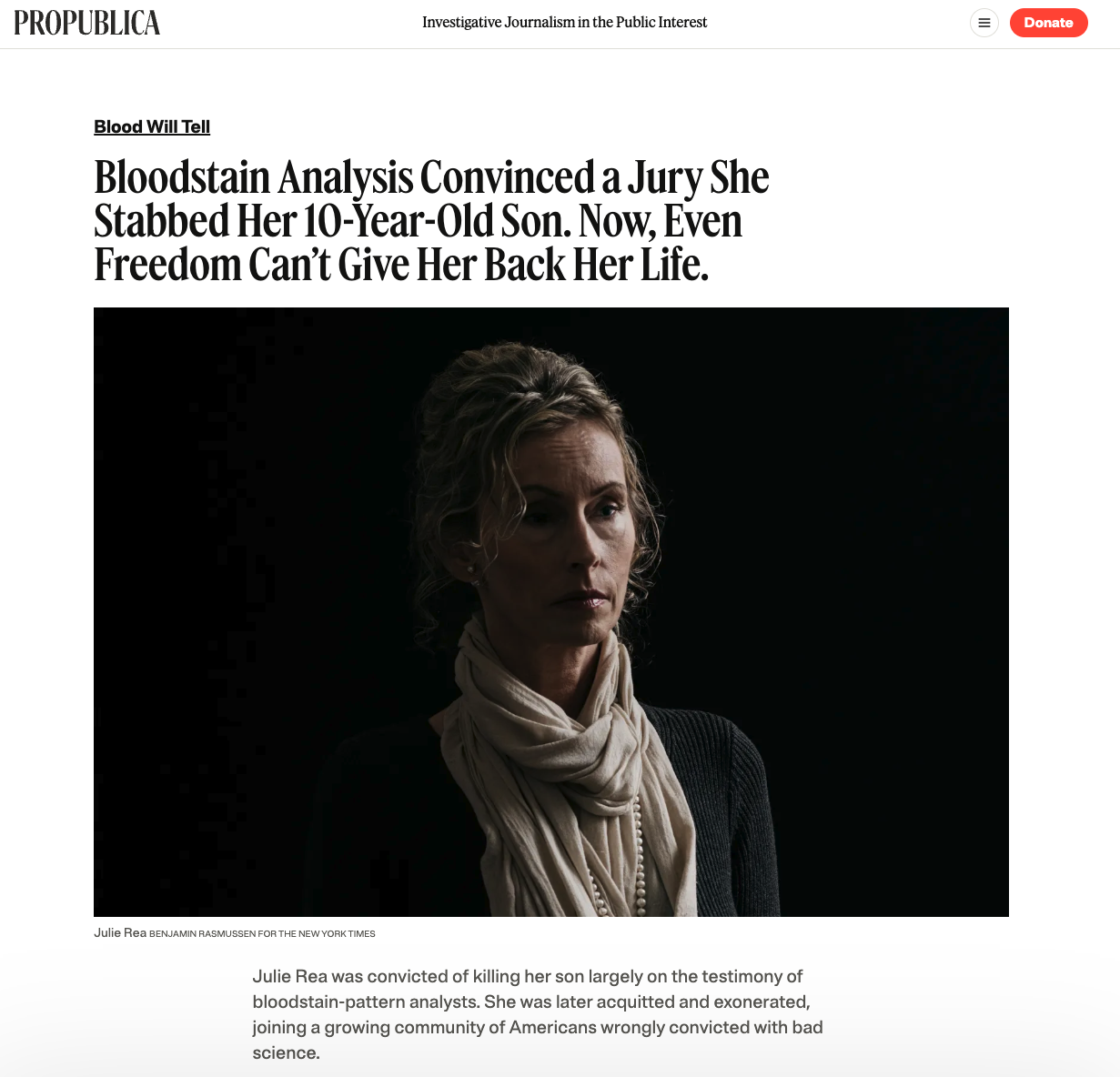
Julie Rea Harper was awoken one night to screams. She got up and entered her 10-year-old son’s bedroom and came face-to-face with an intruder. Julie struggled with the intruder before he fled. Julie ran to a neighbor for help but when police arrived, they found her son, Joel, dead in his room from stab wounds.
Julie was convicted in large part due to the testimony of two bloodstain-pattern analysts who said that no intruder entered the home and she must have killed her son. In 2002 Julie was wrongfully convicted and sentenced to 65 years in Illinois prison. In 2004, the appellate court vacated her conviction and she was eventually acquitted on retrial. Tommy Lynn Sells, a child serial killer, was the true killer.
Learn more about the case in ProPublica’s coverage.

Help us combat faulty forensics
Learn more about Bloodstain Patterns on our Resources page. Sign up for our newsletter to receive the latest updates in our work. To join us in our fight to stop bad forensic science, please consider donating to the Center for Integrity in Forensic Science.