
Amicus Brief: Kimberly Cargill
Kimberly Cargill v. DIRECTOR, TEXAS DEPARTMENT OF CRIMINAL JUSTICE
Filing Date
April 8, 2026
Charge
Capital Murder
Jurisdiction
United States Court of Appeals for the Fifth Circuit
Partners
Summary
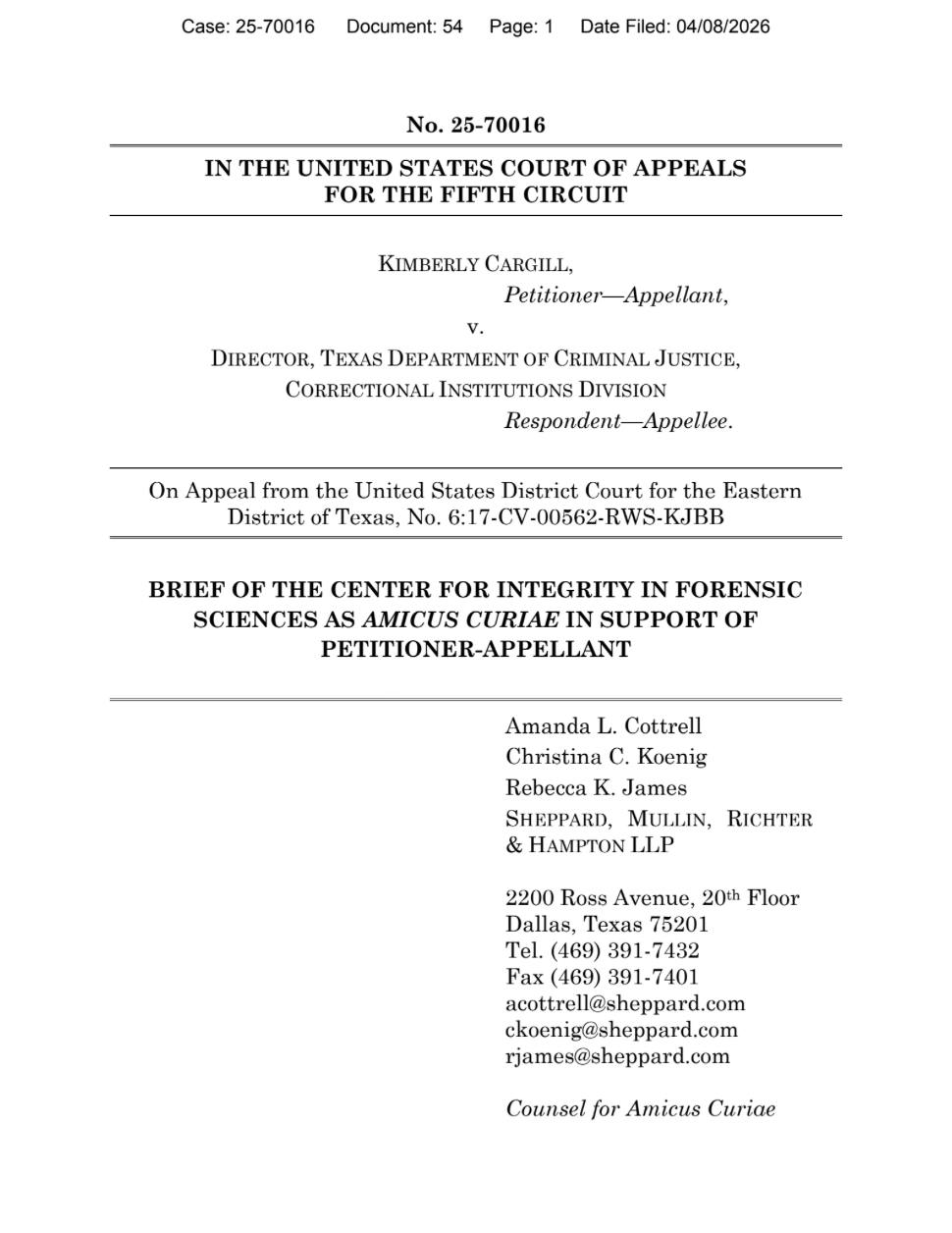
CIFS filed this amicus brief in the United States Court of Appeals for the Fifth Circuit in Kimberly Cargill’s case to argue that manner of death testimony fails every requirement of Rule 702 and Daubert. It exceeds the scope of a medical examiner’s expertise, rests on no reliable scientific methodology, and usurps the jury’s core functions of evaluating evidence and determining guilt.
PRELIMINARY STATEMENT
Despite well-established rules governing the admissibility of expert testimony, courts have permitted a category of expert opinion to play an outsized and deeply prejudicial role in criminal trials: testimony by medical examiners about the manner of a person’s death. As set forth below, manner of death testimony fails every requirement of Rule 702 and Daubert v. Merrell Dow Pharmaceuticals, Inc. It exceeds the scope of a medical examiner’s expertise, rests on no reliable scientific methodology, and usurps the jury’s core functions of evaluating evidence and determining guilt.
The consequences of admitting manner of death testimony are not merely theoretical. Such testimony has been shown to produce wrongful convictions and to imperil defendants’ fundamental right to trial by jury—which is precisely what occurred in Kimberly Cargill’s trial where the prosecution created a false equivalency between the medical examiner’s medical expertise and her non-medical manner of death opinion.